
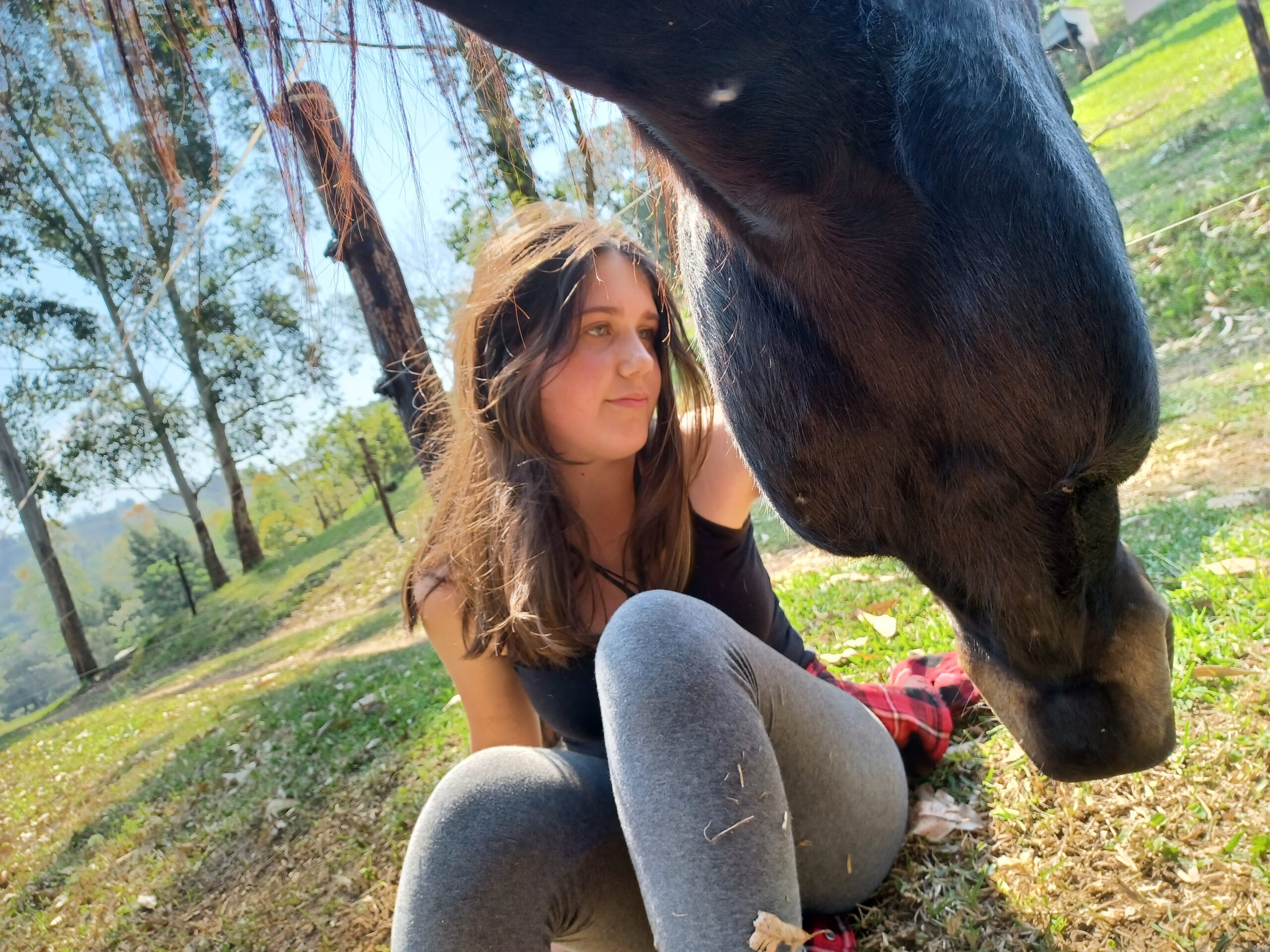
Natural Horsemanship is a form of training that is based around phycology and behavior. This approach to training horses and people involves an empathetic approach. The base of everything we do is understanding where the horse is, first both physically and mentally, and then teaching people to become more in touch with this.
We do this by taking notice of their current behavior and accessing the cause. This will also indicate if they are in any discomfort, physically or emotionally. There are a lot of methods that allow for strong training aids and gadgets as a way to get results. The issue with this method, is that the horses are responding out of fear, and not understanding or trusting their rider or their handler. When a horse is reacting out of a place of anxiety that is where behavioral issues pop up such as biting, kicking, bolting, rearing, not moving forward or spooking.
These horses are reacting with their instinctual flight, fight or freeze response. What makes these behaviors unsafe, are that they are reactive to their environment or handlers. In their mind they need to keep themselves safe and doing so will look for relief in any way they think they can attain it.
A horse can present unwanted behavior for a number of reasons. Anxiety or fear causing them to be reactive. If a task is not clearly understood this may also be a cause of confusion, frustration and fear. Often horses think its the right thing as a result of poor training.
When we train using natural horsemanship we train using pressure and release. We mimic both of the softness and subtly of communication between horses which creates lightness and responsiveness as well as the firm clear boundaries that create safety and avoid unwanted behaviors. This alone isn’t enough.
By an empathic approach we keep the horses emotions in mind and make them feel understood, helps develops trust and avoids a horse feeling the need to shutdown and blow through a threshold. They are the same as humans, in that they appreciate when we take the time to listen to them. Some also need more time then others to process what is being asked.
Consistency also plays a huge factor. We don’t go to gym for a day and expect results. We have to actively put in work over time to see a change. It takes 300 to 500 repetitions to change a behavior. It’s the equivalent of telling one person saying yes to a child and another saying no . It will only create confusion, lack of guidance and structure. This means its vital to be aware and consistent in how you work with your horse.
There can be multiple external factors that influence a horse’s behavior. Things such as environment, people handling them, diet or socialization with other horses , are all things that impact a horse. Often the right environment can be hard to find, so we make due with what we have available, but these are all still factors to keep in mind when looking at a horses behavior.
The goal of natural horsemanship training is to use as little tack and gadgets as possible. Some start or work towards liberty with no tools at all. The idea centers around that the horse must be both mentally and physically present to be able to respond to the lightest of signals. They also have to have a clear understanding of what is being asked and actually want to engage with their handler.
It is a training approach that can aid any horse that’s being problematic. From starting a horse or working with competitive horses. It builds trust that creates confidence in a horse’s rider in any external environment. It creates a clear understanding and builds light and responsive horses making for an enjoyable ride and a great athlete in competition.
Written by,
Bianca Jones